Spiritual Journeys of India

Journeys of a Lifetime,
Curated with Devotion

Expertly guided pilgrimages to Hinduism’s most sacred sites — from the Himalayan Char Dham to Kailash Mansarovar. We handle every detail so you can focus on the divine.
Explore Sacred Journeys
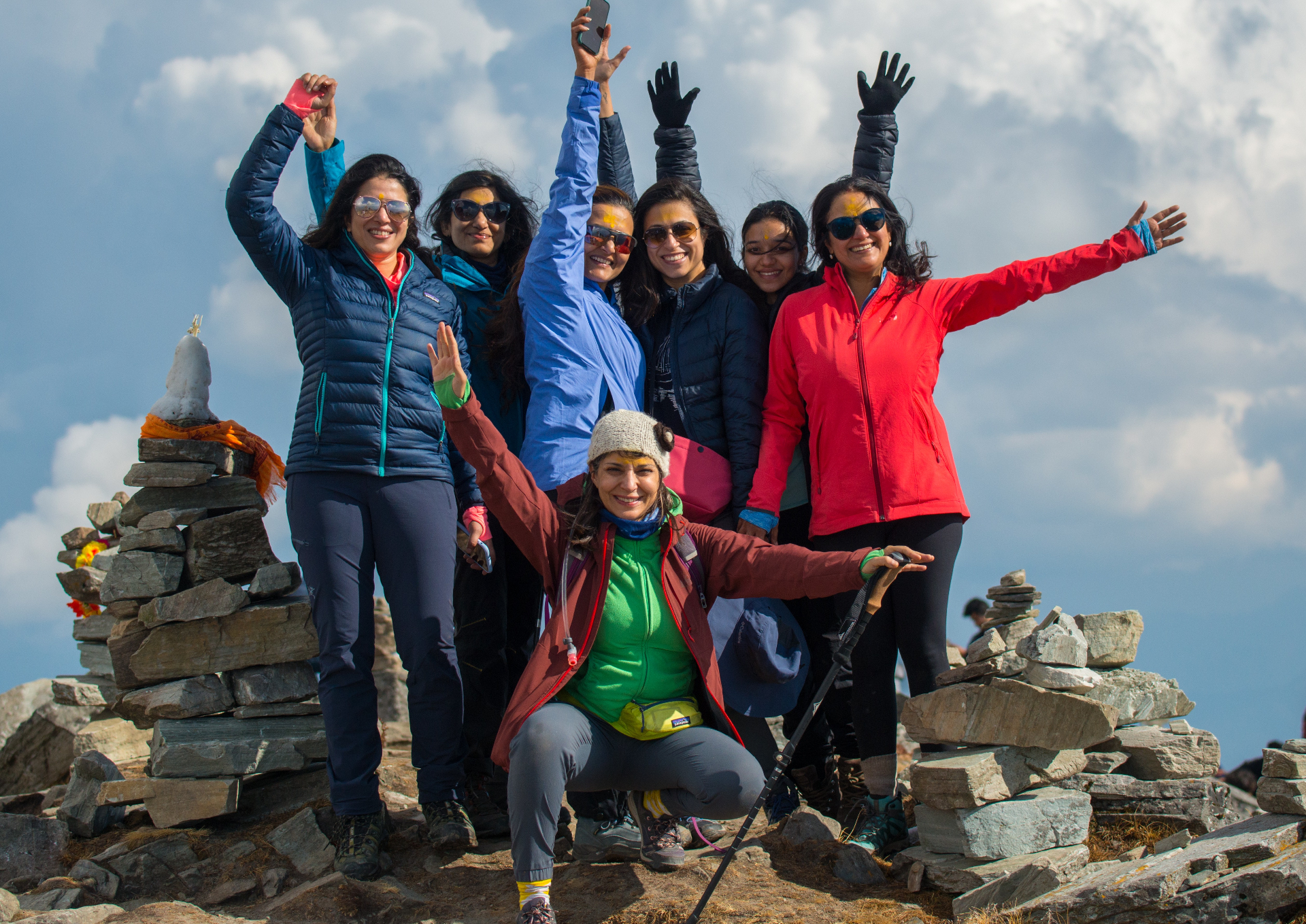
Group of joyful women pilgrims celebrating at a Himalayan mountain summit with prayer stones and a small shrine

Invocation

For thousands of years, pilgrims have crossed mountains, rivers, and deserts to stand before the divine. These journeys — the Char Dham, the Jyotirlingas, Kailash Mansarovar — form the sacred geography of Hinduism.

We curate each yatra with deep respect for tradition and uncompromising attention to comfort, safety, and authenticity. Whether you seek the blessings of Shiva in the high Himalayas or wish to complete the pan-India circuit of Adi Shankaracharya, your journey begins here.

01Chapter 01

Kailash Mansarovar

The Supreme Shaivite Pilgrimage

The abode of Shiva himself. The most spiritually powerful journey on earth.

Mount Kailash rises 6,638 m in western Tibet, revered as the eternal abode of Shiva and Parvati. At its feet lies Lake Mansarovar, created — the Puranas say — by Brahma himself.

The heart of the pilgrimage is the Kailash Parikrama: a 52 km circumambulation of the mountain over three days, crossing the Dolma La pass at 5,630 m. The mountain is never climbed, only circled in reverence.

Who it suitsPhysically fit pilgrims prepared for high altitude and basic conditions. This is a journey of endurance and surrender. Medical screening is required.

Season
May–Sep
Duration
12-15 days
Difficulty
Challenging
Mount Kailash reflected in Lake Mansarovar with prayer flags

A single parikrama is said to erase the sins of a lifetime.

Skanda Purana
02Chapter 02

The Twelve Jyotirlingas

Shiva as Infinite Light

Twelve shrines where Shiva manifested as a column of light without beginning or end.

The Jyotirlingas span the length of India — from Somnath on Gujarat's coast to Rameswaram at the southern tip, from Kedarnath in the Himalayas to Vaidyanath in Jharkhand.

Each marks a spot where Shiva revealed himself as a fiery pillar of light. Darshan at even one is deeply meritorious; completing all twelve is a lifetime achievement for a Shiva devotee.

Who it suitsDevotees of Shiva of all ages. Most temples are easily accessible by road, rail, and air; only Kedarnath involves a trek.

Season
Year-round
Duration
12 days
Difficulty
Easy
Mahakaleshwar Jyotirlinga temple shikhara and carved stone entrance in Ujjain

Neither beginning nor end — only the pillar of pure light.

Shiva Purana
03Chapter 03

Panch Kedar

The Pandavas' Trail

Five hidden Shiva temples across the high Garhwal Himalaya.

After the Mahabharata war, the Pandavas sought Shiva's forgiveness. Shiva evaded them in the form of a bull; parts of his form later surfaced at five spots — Kedarnath (hump), Tungnath (arms), Rudranath (face), Madhyamaheshwar (navel), and Kalpeshwar (matted hair).

This is pilgrimage in its purest form: remote alpine meadows, rhododendron forests, and shrines reached only on foot.

Who it suitsFit pilgrims and trekkers who want solitude and raw sanctity away from crowds. Rudranath is the most demanding; Kalpeshwar the easiest.

Season
May–Jun, Sep–Oct
Duration
12-14 days
Difficulty
Moderate — Challenging
High Himalayan Shiva shrine surrounded by rhododendron blooms

He hid in the form of a bull, and where his body surfaced, we still walk.

Kedarkhand, Skanda Purana
04Chapter 04

The 108 Divya Desams

The Vishnu Trail of the Alwars

The 108 abodes of Vishnu sung into glory by the Tamil poet-saints.

Celebrated in the hymns of the twelve Alwars, the Divya Desams are concentrated in the South — 84 in Tamil Nadu, 11 in Kerala — with others across India and Nepal. The final two lie beyond earth: Tirupparkadal, the Cosmic Ocean, and Vaikuntha, Vishnu's heavenly abode.

Its crown jewels — Srirangam, the largest functioning temple complex in the world, and Tirupati, the most visited shrine on earth — stand as living cathedrals of a thousand-year devotion.

Who it suitsVaishnavas, heritage lovers, and those drawn to South Indian temple culture. Entirely accessible by road; suitable for all ages.

Season
Year-round · Oct–Mar ideal
Duration
4-6 days
Difficulty
Easy
Srirangam temple gopuram at golden hour

A thousand years of Tamil verse, one hundred and eight temple doors.

Nalayira Divya Prabandham
05Chapter 05

Panch Bhoota Sthalams

Shiva as the Five Elements

Five South Indian temples where Shiva is worshipped as Earth, Water, Fire, Air, and Space.

Ekambareswarar in Kanchipuram (Earth), Jambukeswarar at Thiruvanaikaval (Water), Arunachaleswarar at Tiruvannamalai (Fire), Srikalahasteeswara (Air), and Nataraja at Chidambaram (Space).

At Chidambaram, the sanctum holds the Chidambara Rahasyam: empty space itself as the deity — Shiva experienced not as an idol but as the very fabric of existence.

Who it suitsContemplative travellers, students of Vedanta and Shaiva philosophy, and lovers of Dravidian temple grandeur.

Season
Year-round · Oct–Mar ideal
Duration
6-8 days
Difficulty
Easy
Arunachaleswarar temple at night with sacred fire lamps

Earth, water, fire, air, and space — the god is the elements themselves.

Thiruvasagam
06Chapter 06

Sapta Puri

The Seven Cities of Liberation

Seven ancient cities where moksha is said to be attainable.

Ayodhya, Mathura, Haridwar, Varanasi, Kanchipuram, Ujjain, and Dwarka — the Mokshadayini. Living museums of faith: the Ganga Aarti at Haridwar and Varanasi, the Bhasma Aarti at Ujjain, the ghats and legends unbroken across millennia.

Who it suitsEveryone — first-time pilgrims, families, elders, and international visitors seeking to understand Hinduism through its greatest cities.

Season
Year-round · Oct–Mar ideal
Duration
16-18 days
Difficulty
Easy
Ganga Aarti ceremony with priests holding brass lamps at Haridwar

Seven cities, seven doors — and each one opens.

Garuda Purana
07Chapter 07

Shakti Peethas

The Trail of the Goddess

The sacred sites where the Goddess herself resides — 51 to 108 across the subcontinent.

Where parts of Sati's body fell to earth, Shakti Peethas arose — seats of the Divine Mother spread across India, Nepal, Bangladesh, Sri Lanka, and Tibet.

Major peethas include Kamakhya in Assam, Kalighat in Kolkata, Vaishno Devi in Jammu, Jwalamukhi in Himachal, and Vindhyavasini. Each carries its own legend, ritual tradition, and living tantra heritage.

Who it suitsDevi devotees and travellers drawn to India's goddess traditions. Regional circuits available — Eastern, Himalayan, and Navratri departures.

Season
Year-round · Navratri peak
Duration
5-8 days
Difficulty
Easy — Moderate
Goddess shrine with red hibiscus offerings and oil lamps

Wherever a fragment of her fell, the ground still trembles with her presence.

Devi Bhagavata Purana

A gentle guide

How to choose your journey

The path that speaks to your spirit — and to your strength.

If you seekThe ultimate test of devotion
Kailash Mansarovar
Challenging · May–Sep
If you seekDeep Shiva devotion across India
12 Jyotirlingas
Easy · Year-round
If you seekTrekking, solitude & sanctity
Panch Kedar
Moderate–Challenging
If you seekVaishnava devotion & temple heritage
108 Divya Desams
Easy · Oct–Mar
If you seekPhilosophy & the five elements
Panch Bhoota Sthalams
Easy · Oct–Mar
If you seekSacred cities & living tradition
Sapta Puri
Easy · Year-round
If you seekThe Divine Mother
Shakti Peethas
Easy–Moderate · Navratri
If you seekA story-led journey
Avatar & Deity Trails
Easy · Varies

Begin

Begin your sacred journey.

Speak to a pilgrimage curator today — we’ll help you choose the yatra that calls to you.

WhatsApp Us